
Baby Swing Exporter India: A Guide for Wholesale Buyers

Baby swing suppliers
5 mins reading time
Baby Swing Exporter India: A Guide for Wholesale Buyers

Baby swings are a steady seller for toy and baby product retailers, and wholesale buyers around the world are increasingly looking at India as a source. The category looks simple, but a swing is a product where a child’s weight is carried by a frame, straps and fittings, so construction and safety details matter a great deal. For an importer or distributor, choosing the right baby swing exporter in India means looking well beyond price and colour. This guide explains the types of swings you will come across, how to evaluate them, and what to check on the export side before you commit to a bulk order.

Types of Baby Swings and Sourcing Considerations

Baby swings come in several forms, and each suits a different customer and use. Common types include:

Infant swings and rockers with a supportive seat, designed for very young children and used under close supervision

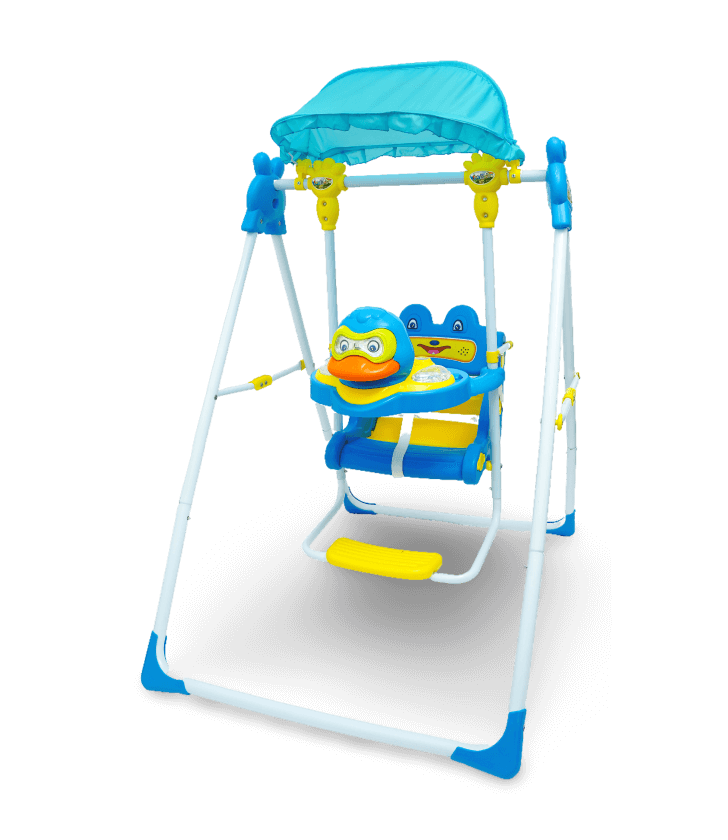
Frame-mounted toddler swings, which come with their own stand and are popular for home use

Hanging or indoor swings, which attach to a suitable overhead support

Outdoor swings, intended for gardens, balconies or play areas

Some designs are purely manual, while others include extra features such as canopies, trays or music. As a buyer, decide which types match your market before you approach suppliers. The age range, price point, available storage space and local preferences all affect which products will sell. A good exporter can explain the differences between its models and help you build a range without overloading you with similar items.

Evaluating Construction and Stability

Construction is the first thing to examine. Check the frame material and thickness, the joints, the hanging points and every connector that carries weight. Plastic parts should be free of cracks, thin sections and rough moulding marks, and metal parts should be well finished and protected against rust where the product will be used outdoors or in humid conditions.

Stability matters just as much. A free-standing swing should have a wide, balanced base that resists tipping when the child moves, and the assembled product should feel solid, not flexible or wobbly. Ask how the manufacturer tests its swings for strength and stability, and whether the stated load limits are based on testing and not just estimates. When you inspect a sample, assemble it exactly as a customer would, since awkward assembly or ill-fitting parts are often the first signs of weak production.

Restraints, Weight Limits and Age Recommendations

For a baby swing, the seat and restraint system deserve particular attention. Look at the harness or safety strap design, how securely the buckles close and whether the straps are adjustable and easy for a caregiver to use correctly. The seat should offer appropriate support for the age range it claims to suit, and edges should be smooth and padded or rounded where a child’s body will make contact.

Every swing should show clear weight limits and age recommendations on the product and in the instructions. Ask the exporter how these figures were decided, and be cautious if the information is vague, inconsistent or missing. Clear, accurate guidance protects your customers and protects you as the seller. Also keep your marketing factual. Describe features and build quality, and avoid making health or developmental claims about a swing, since these are not something a product listing should promise.

Packaging, Compliance and Documentation

Swings are often bulky, so packaging has a real effect on both damage rates and shipping cost. Ask how products are packed for export: carton strength, protection for frames and plastic parts, and whether the design allows efficient loading into co=\]

]ntainers. Check that instructions, warnings and any required labels are included and clearly printed, in the languages your market needs.

Compliance requirements differ from one country to another, and they cover areas such as safety testing, labelling and documentation. Ask the exporter which standards its swings are designed and tested to, and request supporting test reports or certificates relevant to your destination. Rules change, so confirm the current requirements with your own compliance adviser, testing body or customs agent instead of relying on a supplier’s statement alone.

Documentation should be handled smoothly too. A dependable exporter will be familiar with commercial invoices, packing lists, shipping documents and any certificates your country requires, and will tell you clearly who is responsible for each part of the process.

Shipping Terms and Supplier Communication

Compare quotations on the same basis. Look at the unit price, minimum order quantity, shipping terms (such as FOB, CIF or EXW), lead time and payment terms, and find out what happens if goods arrive damaged or the shipment is delayed. A lower price is not a better deal if it comes with unclear terms or weak support.

Communication is a useful test of reliability. A good exporter replies promptly, answers technical questions directly, shares samples without fuss and explains what it can and cannot do. Slow, vague or evasive replies at the enquiry stage rarely improve after you have paid a deposit.

Practical Supplier Checklist

Keep this list handy when comparing baby swing suppliers:

A product range that fits your target customers and age groups

Strong frames, secure joints and stable bases

Reliable harness or restraint systems that are easy to use

Clearly stated weight limits and age recommendations

Smooth edges, durable materials and good finishing

Safety test reports and documents suited to your market

Clear instructions and warnings

Export-ready packaging that limits transit damage

Transparent pricing, MOQs, shipping terms and lead times

Samples available before bulk orders, and prompt communication

Talk to Funridetoys

Funridetoys works with wholesalers, distributors and retailers who want dependable children’s products, including baby swings. If you are considering swings for your next order, contact our team to request verified product specifications, available models and export details. We will help you review what suits your market so you can make a confident buying decision.

Contact Funridetoys today to ask about our baby swing range and export information.


Related Blogs

Why Quality Control Matters in Plastic Toy Manufacturing

Why Quality Control Matters in Plastic Toy Manufacturing

Every plastic toy that reaches a shelf has gone through a long chain of decisions: material choice, mould design, production, assembly and packing. Quality control is what holds that chain together. It is the set of checks that makes sure the toy a retailer approves as a sample is the same toy that arrives in the thousandth carton. For a plastic toys manufacturer, quality control is not an optional extra or a marketing phrase. It protects children, supports retailers, builds parents’ trust and keeps the manufacturer’s own business healthy. This article explains why it matters, what good checks look like and how buyers can find out what a manufacturer really does. Why Consistent Quality Matters to Everyone Quality problems rarely stay with one party. Children are the first to feel them, since they handle toys roughly and put them in their mouths, drop them and pull them apart. A weak joint, a rough edge or a loose part can turn a fun product into a hazard. Parents rely on the retailer’s judgement. When a toy breaks quickly or looks different from its photo, they lose trust in the product, the brand and the store. Retailers then face returns, refunds, negative reviews and wasted shelf space. For the manufacturer, repeated complaints mean lost repeat orders and a damaged reputation. Consistent quality, in other words, is the foundation that every other part of the toy business stands on. What Quality Checks Should Cover The exact checks depend on the product, but good manufacturers look at several common areas. Sharp edges and surfaces. Moulded plastic can leave burrs, flash or rough seams, especially where mould halves meet. Finished toys should be checked by touch and sight, and any rough or sharp area should be removed or corrected. This matters most for toys used by babies and toddlers. Small detachable parts. Toys for young children need extra care. Inspectors should check whether caps, wheels, buttons, knobs or decorative pieces are firmly attached and whether any part could come loose and be small enough to be a risk. Which parts are acceptable depends on the age group the toy is made for, so the checks should be matched to the stated age range. Structural strength. Ride-on toys, swings, walkers and other products that carry weight should be checked for frame strength, joint security, stability and wheel or axle performance. Checking a few units from each batch under realistic use helps spot weaknesses before products ship. Finish and appearance. Surface marks, warping, cracks, colour patches, poorly fitted parts and printing or sticker defects all affect quality. Colours should match approved references, and parts of the same toy should match each other. Material conformity. Manufacturers should be able to confirm that the plastics and colourants used match the specification and are suitable for children’s products, in line with the rules that apply to the toy and the market where it will be sold. Documented Inspections, Batch Consistency and Corrective Action Checks only work when they are systematic and recorded. Documented inspections turn quality from a promise into something that can be reviewed. Typically, this includes inspection of incoming raw materials, checks during production, a review of finished goods and a final look at packing and labelling before dispatch. Records should show what was checked, when and by whom, and what was found. Batch consistency is the next test. A manufacturer should keep approved samples or reference standards and compare production against them, so that colour, size, fit and finish stay the same from one order to the next. This is especially valuable to retailers who reorder, since customers expect a repeat purchase to match the original. Where applicable, products may also need testing against relevant safety requirements, either through in-house checks or an outside laboratory. The requirements differ by product and market, so buyers should confirm what applies to them and ask for supporting reports. Finally, a sound system includes corrective action. When a defect appears, a good manufacturer does not simply replace the faulty unit. It looks for the cause, such as a worn mould, a material issue or an assembly error, and fixes it so it does not recur. Keeping a record of defects and the steps taken in response is a strong sign of a mature process. How Buyers Can Ask the Right Questions Many manufacturers describe their products as “premium quality” or “world-class,” but those phrases tell you nothing. To understand what is really happening, ask specific questions and expect specific answers: At which stages of production do you carry out inspections? What do inspectors check on this product, and what counts as a defect? How do you check for sharp edges and loose small parts? How do you test structural strength for products that carry weight? How do you keep colours and finishes consistent across batches? Can I see sample inspection records or a typical checklist? Which tests or reports are available for this product, and for which standards? What do you do when a defect is found, and how do you stop it happening again? What happens if a customer receives faulty goods? Pay attention to how the answers come. A confident manufacturer will give clear, practical detail and may be happy to share documents or arrange a visit or video walkthrough. Vague, evasive or overly general replies suggest that quality control may not be as strong as claimed. Work With a Manufacturer That Welcomes Questions At Funridetoys, we supply retailers, distributors and wholesalers with children’s products, including baby walkers, baby swings, tricycles and indoor games. We encourage buyers to ask detailed questions and request samples before ordering, because good partnerships begin with clear information. If you would like to know more about our product ranges and how we approach quality, get in touch with our team. Contact Funridetoys today to request product details and samples.  

Read Story
How to Choose a Reliable Baby Walker Supplier in India

How to Choose a Reliable Baby Walker Supplier in India

For toy shops, baby product stores and online sellers, finding a dependable baby walker supplier in India can feel harder than it should. Search results are full of manufacturers, traders, agents and resellers, and they all describe themselves in similar ways. Yet the supplier you choose affects almost everything that follows: product quality, how quickly stock arrives, what documents you receive and how problems are handled after the sale. Baby walkers need particular care, since they are used by very young children and are regulated or discouraged in some markets. This guide explains how to tell the types of suppliers apart and how to check that a supplier is genuinely reliable before you place a wholesale order. Manufacturer vs. Supplier: Know Who You Are Buying From The first thing to understand is the difference between buying directly from a manufacturer and buying through a supplier. A manufacturer makes the product in its own facility or controls production closely, so it can usually answer detailed questions about materials, moulds, assembly and quality checks. A supplier, such as a trader, wholesaler or distributor, buys from one or more factories and sells on, often offering a wider choice, smaller quantities and faster delivery from stock. Neither route is automatically better. Direct manufacturer sourcing can offer better pricing on large orders and more scope for customization, while a good supplier can be more convenient for retailers who want mixed products, lower minimum order quantities or quicker restocking. What matters is that you know which you are dealing with. Ask plainly whether the company manufactures the walkers itself or sources them, and if it sources them, who makes them. A reliable supplier will answer this openly and be able to trace its products back to the source. Catalogue, Order Quantities and Pricing Transparency A professional supplier keeps an organised catalogue with clear details for each model: dimensions, materials, age and weight guidance, features, colours and packaging. Photos should match the real product, and the supplier should be able to confirm which models are currently available and which are made to order. Order quantities should be reasonable and clearly stated. Ask about the minimum order quantity for each model, whether you can mix models in one order and how pricing changes at higher volumes. Pricing should be transparent, with a clear breakdown of what is included, such as packaging, taxes and transport. Be cautious about quotations that are far lower than everyone else’s, or that change after you show interest. Hidden costs and shifting prices are a common sign of an unreliable partner. Stock Availability and Delivery Commitments Many retail problems come from supply gaps, not from product faults. Ask whether the supplier holds ready stock or produces to order, how long each takes, and how it handles peak seasons such as festivals and school holidays. A good supplier will give realistic delivery timelines, explain how goods are packed and shipped, and keep you updated if there is a delay. Pay attention to how firmly the supplier commits. Vague promises such as “we’ll try our best” are not much help when your shelf is empty. Look for clear dispatch times, tracked shipments and a clear process for damage or missing items in transit. Verifying Certification and Product Documentation Because baby walkers can pose injury risks and are subject to safety rules in many markets, verification is not optional. Ask which applicable safety standards the walkers are designed and tested to, and request test reports, certificates or compliance documents relevant to your market. Check that the documents are current, clearly refer to the product you are buying and come from a recognised source. Rules change over time, and some countries restrict certain walker designs, so confirm the current requirements with your own compliance adviser or testing body instead of relying only on a supplier’s word. Also look at product documentation in general: specification sheets, age and weight guidance, safety warnings and easy-to-follow instructions. Keep your own marketing accurate and factual. Describe the build quality and features of the product, and avoid suggesting that a walker helps a child learn to walk or provides any health benefit. Consistency and After-Sales Support A supplier that sends one excellent sample and then ships inferior stock is a serious risk. Ask how the supplier keeps quality consistent between batches, and compare delivered stock against the approved sample on every order. Consistency in finish, colour, fit and packaging is a sign of control behind the scenes. After-sales support matters just as much. Find out how complaints are handled, whether replacements are offered for faulty or damaged units, and whether spare parts such as wheels or trays are available. A supplier that stays responsive after payment is far more valuable than one that is only friendly before it. Questions to Ask Before Placing a Wholesale Order Before you commit, put these questions to every baby walker supplier you are considering: Are you the manufacturer, or do you source from a factory? Which one? Which models are in stock, and which are made to order? What are the minimum order quantities and the price at different volumes? What does the quoted price include, and are there any extra charges? What are your lead times, and how do you handle delays? Which safety standards were these walkers designed and tested to, and can I see the reports? Can I receive samples before a bulk order? How do you keep quality consistent from batch to batch? What happens if goods arrive damaged or faulty? Do you offer spare parts and clear instructions for each model? A supplier who answers these questions clearly and consistently is likely to be a dependable long-term partner. Source with Funridetoys Funridetoys works with retailers, distributors and wholesalers who want dependable children’s products, including baby walkers. If you are comparing suppliers, contact our team to ask about available models, specifications, samples and bulk order terms. We will gladly answer your questions so you can make an informed decision. Contact Funridetoys today to discuss your wholesale requirements.  

Read Story
Read all stories